The China Helper
Your practical guide to studying, living and learning in China.
The China Helper
Your practical guide to studying, living and learning in China.

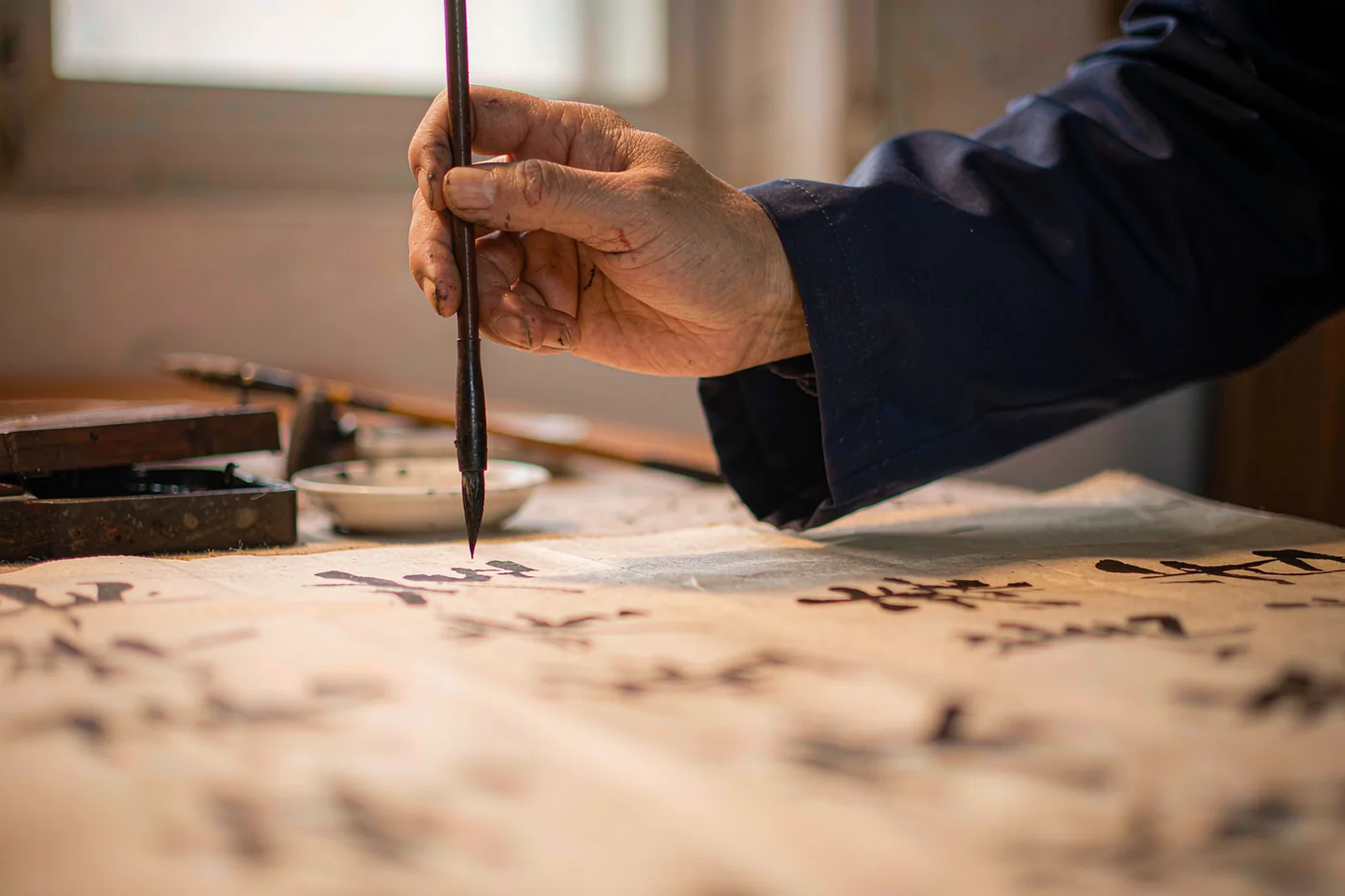
How many Chinese characters do you actually need to know? This beginner guide explains how characters work — radicals, sound components and stroke order — and lists the 100 most useful characters to learn first.
How to use this guide
This is a practical learning guide, not the official standard. The reference behind modern Chinese character use is the Table of Standardised General Chinese Characters (8,105 characters in three tiers), and exam syllabi are revised periodically — check the official source before you rely on any specific requirement.
Last reviewed: September 2026 · Part of our Learn Chinese guide series.
At a glance
Quick answer
Around 1,000 characters cover most everyday reading — and the first 100 already unlock signs, menus and campus notices. Each character combines a meaning component (radical) with often a sound component. Learn them inside words and word families, never in isolation; a four-week plan (10 → 25 → 50 → 100) is enough to start reading real Chinese.
Learning Chinese characters can feel overwhelming for beginners. Unlike alphabet-based languages, Chinese uses thousands of unique characters, and each character has its own:
However, international students do not need to memorize thousands of characters at the beginning. By learning the most common characters first, you can quickly understand:
This guide introduces 100 essential Chinese characters every beginner should know.
Chinese characters are the foundation of written Chinese. Even in the digital age, characters appear everywhere:
For international students living in China, recognizing basic characters makes daily life much easier. Example: Without knowing characters:
出口
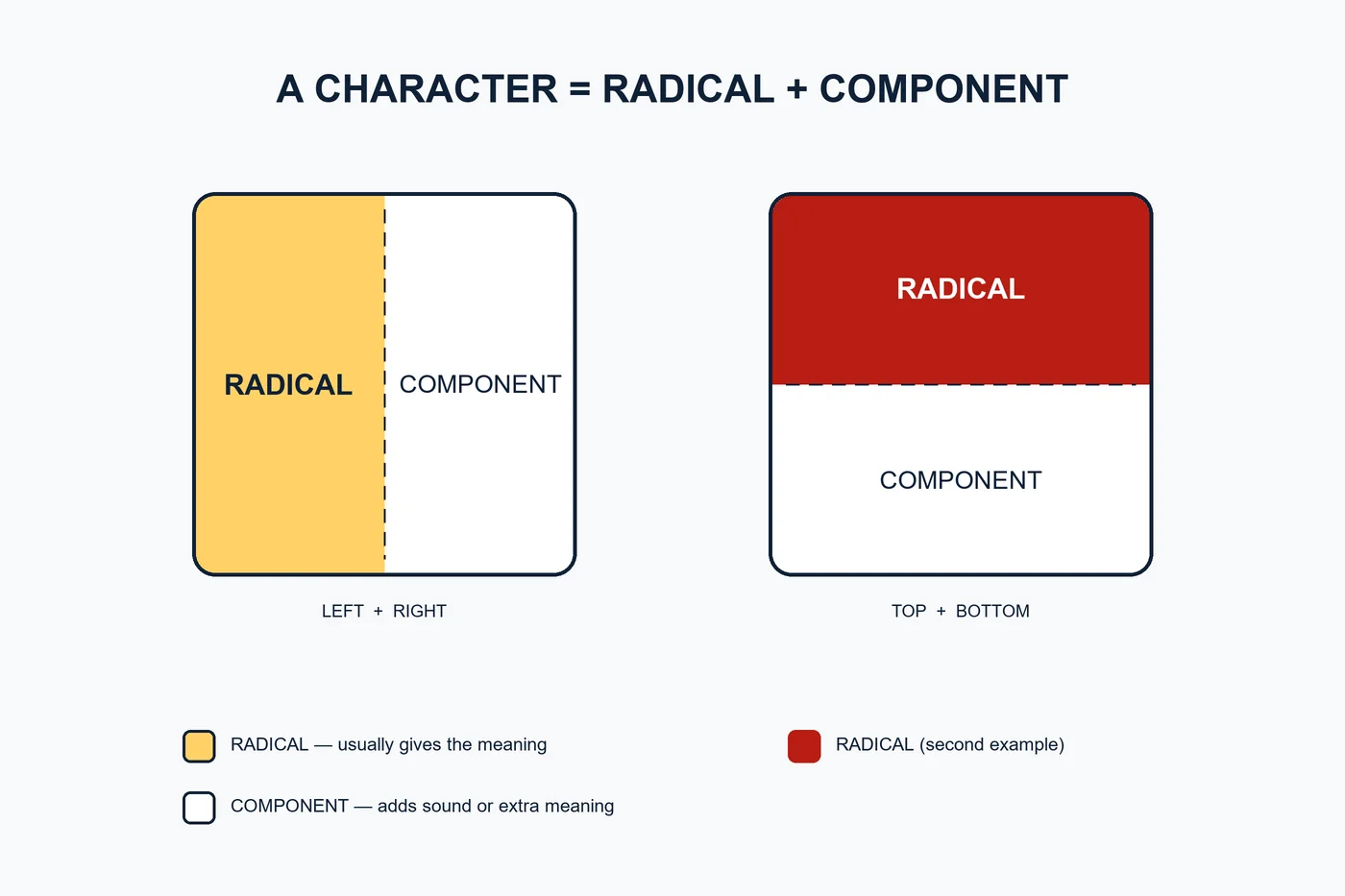
Most Chinese characters contain:
| Character | Pinyin | Meaning |
|---|---|---|
| 我 | wǒ | I / me |
| 你 | nǐ | you |
| 他 | tā | he |
| 她 | tā | she |
| 人 | rén | person |
| 大 | dà | big |
| 小 | xiǎo | small |
| 子 | zǐ | child |
| 女 | nǚ | woman |
| 男 | nán | man |
Examples: 我是学生。 Wǒ shì xuéshēng. I am a student.
| Character | Pinyin | Meaning |
|---|---|---|
| 一 | yī | one |
| 二 | èr | two |
| 三 | sān | three |
| 四 | sì | four |
| 五 | wǔ | five |
| 六 | liù | six |
| 七 | qī | seven |
| 八 | bā | eight |
| 九 | jiǔ | nine |
| 十 | shí | ten |
| Character | Pinyin | Meaning |
|---|---|---|
| 日 | rì | day |
| 月 | yuè | month |
| 年 | nián | year |
| 今 | jīn | today/current |
| 明 | míng | tomorrow/bright |
| 天 | tiān | day/sky |
| 时 | shí | time |
| 分 | fēn | minute |
| 早 | zǎo | early |
| 晚 | wǎn | late |
| Character | Pinyin | Meaning |
|---|---|---|
| 吃 | chī | eat |
| 喝 | hē | drink |
| 看 | kàn | look/watch |
| 听 | tīng | listen |
| 说 | shuō | speak |
| 读 | dú | read |
| 写 | xiě | write |
| 学 | xué | study |
| 买 | mǎi | buy |
| 去 | qù | go |
Examples: 学习中文。 Xuéxí Zhōngwén. Study Chinese.
| Character | Pinyin | Meaning |
|---|---|---|
| 学 | xué | study |
| 校 | xiào | school |
| 生 | shēng | student/life |
| 老 | lǎo | old/teacher prefix |
| 师 | shī | teacher |
| 书 | shū | book |
| 本 | běn | volume/book measure |
| 文 | wén | language/writing |
| 字 | zì | character |
| 课 | kè | class |
| Character | Pinyin | Meaning |
|---|---|---|
| 家 | jiā | home |
| 房 | fáng | room |
| 门 | mén | door |
| 电 | diàn | electricity |
| 话 | huà | speech |
| 水 | shuǐ | water |
| 火 | huǒ | fire |
| 饭 | fàn | meal |
| 钱 | qián | money |
| 店 | diàn | shop |
| Character | Pinyin | Meaning |
|---|---|---|
| 车 | chē | vehicle |
| 站 | zhàn | station |
| 路 | lù | road |
| 北 | běi | north |
| 南 | nán | south |
| 东 | dōng | east |
| 西 | xī | west |
| 出 | chū | exit |
| 入 | rù | enter |
| 开 | kāi | open/start |
| Character | Pinyin | Meaning |
|---|---|---|
| 菜 | cài | dish/vegetable |
| 米 | mǐ | rice |
| 茶 | chá | tea |
| 肉 | ròu | meat |
| 鱼 | yú | fish |
| 新 | xīn | new |
| 旧 | jiù | old |
| 多 | duō | many |
| 少 | shǎo | few |
| 贵 | guì | expensive |
Examples: 多少钱? Duōshao qián? How much?
| Character | Pinyin | Meaning |
|---|---|---|
| 好 | hǎo | good |
| 坏 | huài | bad |
| 快 | kuài | fast |
| 慢 | màn | slow |
| 高 | gāo | high |
| 长 | cháng | long |
| 短 | duǎn | short |
| 热 | rè | hot |
| 冷 | lěng | cold |
| 美 | měi | beautiful |
Examples: 很好。 Hěn hǎo. Very good.
These characters appear extremely frequently.
| Character | Pinyin | Meaning |
|---|---|---|
| 是 | shì | be |
| 有 | yǒu | have |
| 在 | zài | at/in |
| 不 | bù | not |
| 没 | méi | not/have not |
| 的 | de | possessive marker |
| 了 | le | completed action |
| 和 | hé | and |
| 也 | yě | also |
| 都 | dōu | all |
Examples: 我是学生。 I am a student. 我不懂。 I don’t understand.
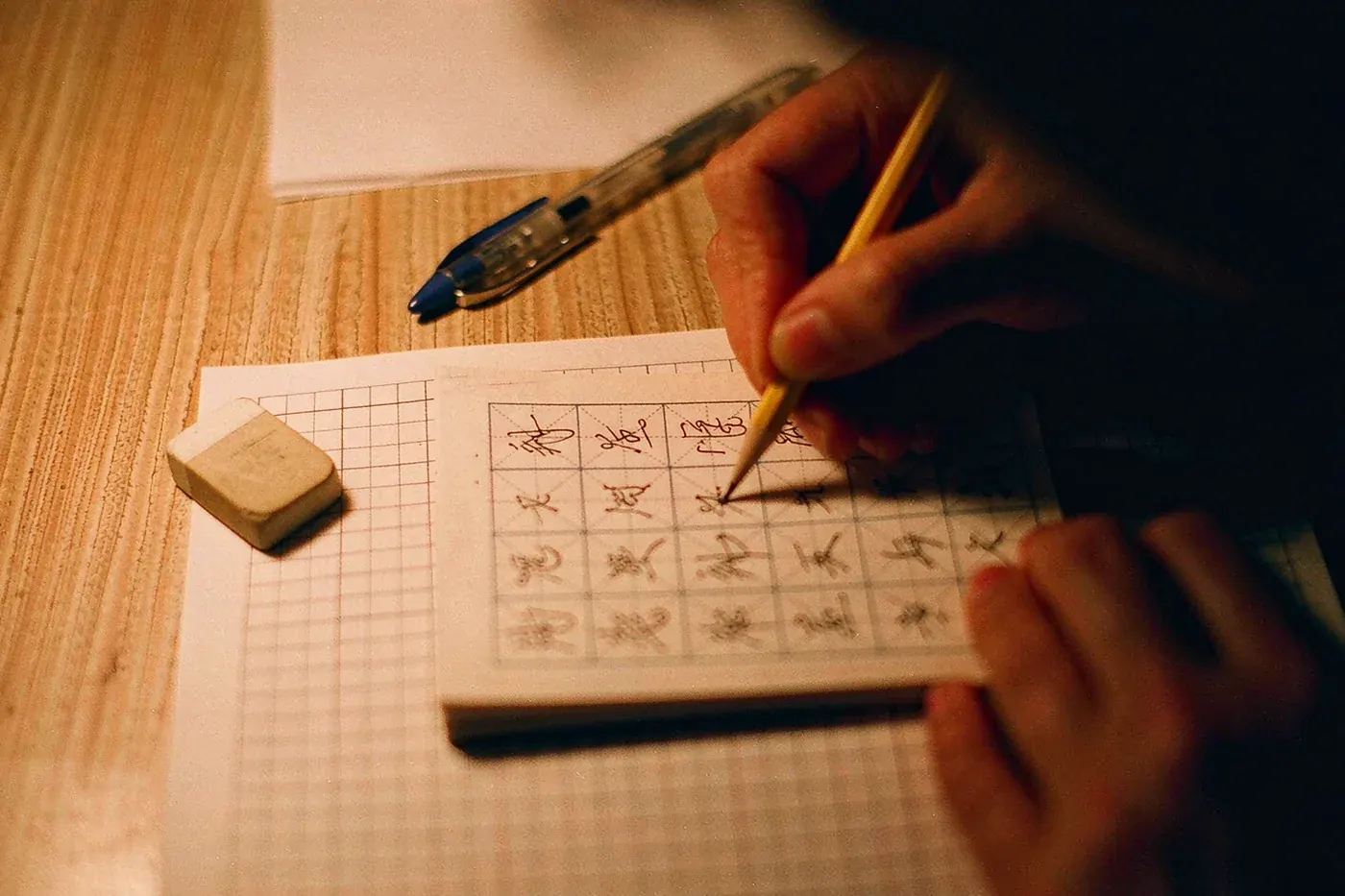
Even if you mainly type Chinese, handwriting helps you remember:
Start with simple materials:
Small daily exposure creates strong recognition.
Learn:
Goal: 30 characters
Learn:
Goal: 60 characters
Learn:
Goal: 100 characters
Practice:
For basic daily communication: 500-800 characters
are usually enough for many situations. The first 100 characters provide the foundation.
They are different from alphabet systems, but they follow patterns. Learning radicals and character groups makes the process easier.
The best approach is: Pinyin → Basic pronunciation → Characters → Words → Sentences
Both should be learned together.
Chinese characters may look complicated at first, but they become much easier when you understand their patterns. Start with: ✅ Common characters
✅ Daily vocabulary
✅ Simple sentences
✅ Real-life usage
The goal is not only to memorize characters, but to use them naturally in everyday life in China.
Free resource
100 Essential Chinese Characters
Learn the 100 characters that unlock signs, menus and forms. Stroke order, pinyin and meaning for the most useful characters, grouped by the situations where you will actually meet them.
Related guides
Next step
Pronunciation and characters grow together — pair these first 100 characters with the sound system.
Read the Pinyin guideOfficial resources: Table of Standardised General Chinese Characters (Ministry of Education) — the current national character standard: 8,105 characters in three tiers, of which the 3,500-character Level 1 list covers basic education and general reading.
Disclaimer: This is a practical learning guide, not an official standard. Language norms and syllabi are revised periodically. Always confirm with the relevant authority, institution or official source before you rely on it.
