The China Helper
Your practical guide to studying, living and learning in China.
The China Helper
Your practical guide to studying, living and learning in China.


Nothing prepares a newcomer for the first Golden Week: the campus empties, train tickets vanish weeks in advance, and half the city closes for eight days while the other half doubles its hours. China’s holiday system is generous, predictable and — because of one quirk called 调休 — slightly confusing. This guide gives you the calendar, explains the swap-day mechanism, and tells you what actually closes so you can plan everything from visa appointments to a hot meal.
Check the official source before you act
Holiday dates and arrangement details are published by the State Council each year for the following year, and were last reviewed in September 2026. Exact dates, swap-day patterns and local arrangements change annually. Confirm with the official notice for the year in question, your university’s academic calendar, and individual venues before making plans.
Last reviewed: September 2026 · Part of our China Arrival Guides guide series.
At a glance
Quick answer
China’s statutory holidays total 13 days a year, but 调休 swap days stretch the two biggest — Spring Festival (late January or February) and National Day (1 October) — into week-long breaks. Expect banks, government offices, campus service windows and many small restaurants to close; malls, metro, delivery apps and big chains stay open and busy. Travel around the two golden weeks is intense: book trains and flights the moment sales open. The official dates for each year come out the previous November, so build your plans — including visa and residence permit appointments — around them.
| Holiday | When | Statutory | Typical break |
|---|---|---|---|
| New Year’s Day (元旦) | 1 January | 1 day | 1–3 days with a weekend |
| Spring Festival (春节) | Late Jan / Feb, by lunar calendar | 4 days | Up to 8 days — the year’s biggest |
| Qingming (清明) | 4–6 April | 1 day | 3-day weekend |
| Labour Day (劳动节) | 1 May | 2 days | Around 5 days |
| Dragon Boat (端午) | June, by lunar calendar | 1 day | 3-day weekend |
| Mid-Autumn (中秋) | Sept / Oct, by lunar calendar | 1 day | 3 days, or merged with National Day |
| National Day (国庆) | 1–3 October | 3 days | 7–8 days — “Golden Week” |
The exact dates for each year are set by the State Council and published towards the end of the previous year. Since the 2025 revision the statutory total is 13 days, with Spring Festival now including Lunar New Year’s Eve. Treat the table above as the shape of the year, and the official notice as the facts.
This is the part that catches everyone. To create a longer break, the government reassigns adjacent weekend days: you might get Saturday and Sunday off attached to a holiday, but then work or attend classes on a different weekend to pay for it. A “5-day Labour Day holiday” is often one statutory day plus a weekend plus one borrowed weekend repaid the following week.
| Status | What falls in it |
|---|---|
| Closed | Banks, government and visa windows, post offices, most government services, campus admin offices, many small family-run restaurants and shops |
| Limited hours | Clinics and pharmacies (usually on rotation), small supermarkets, banks with major branches on emergency service |
| Open — and busy | Malls, metro and trains, chain stores and restaurants, hotels, scenic spots (peak crowds), food delivery and e-commerce (with surcharges and delays) |
The pattern to internalise: anything run by the state closes; anything that makes money from crowds stays open. Plan admin — bank matters, residence permit steps, SIM problems — outside holiday windows entirely.
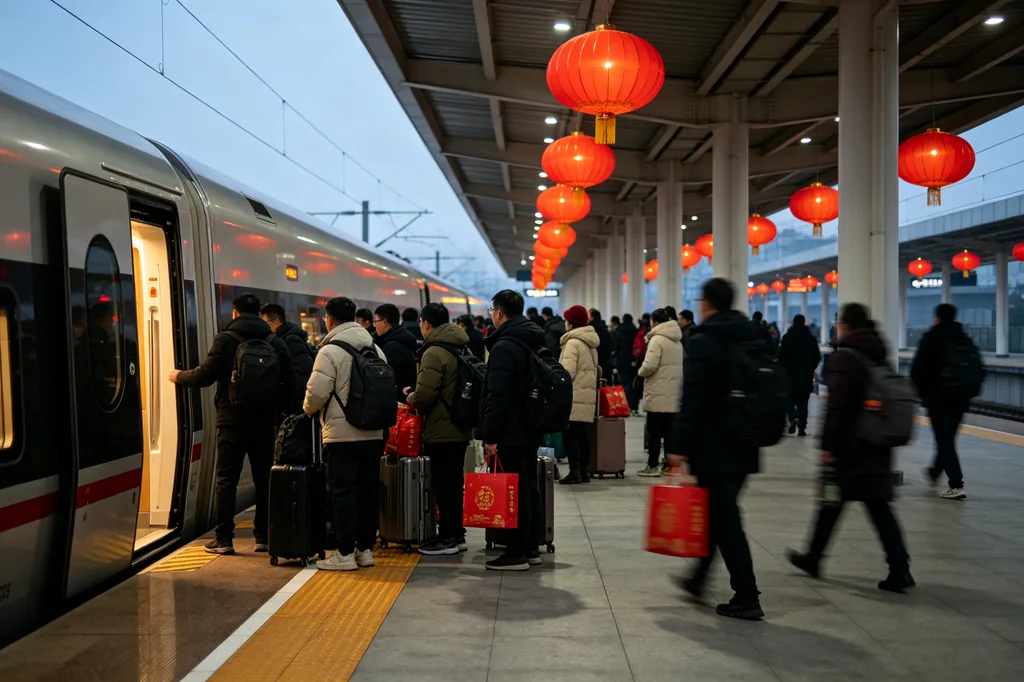
Spring Festival and National Day move hundreds of millions of people. This is not a normal busy season; it is the largest scheduled migration on earth, and it hits trains first.

Free resource
Free China downloads
Checklists, phrase sheets and character packs you can print and keep — built for students in their first weeks in China.
Related guides
Next step
If a golden week is coming, the single biggest money-saver is booking trains the moment sales open.
Read the trains and flights guideDisclaimer: Rules, prices and platform features in China change frequently and can vary by city, institution and individual circumstances. Always confirm with the relevant authority or provider before making arrangements.
