The China Helper
Your practical guide to studying, living and learning in China.
The China Helper
Your practical guide to studying, living and learning in China.

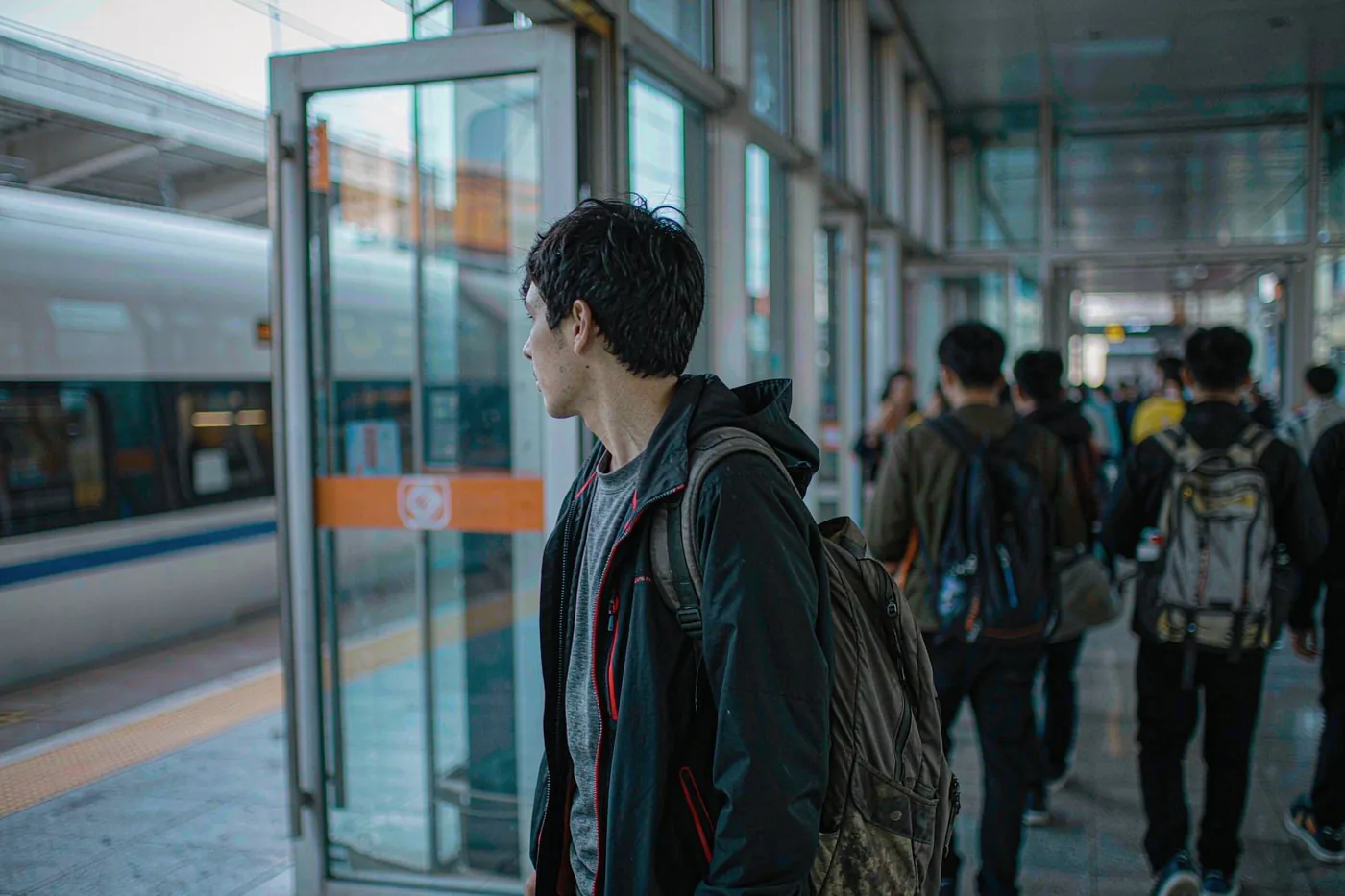
Book high-speed rail with your passport, choose seat classes, navigate huge stations, find cheap flights and survive holiday travel rushes.
Trains in China are the fastest, cheapest way to explore the country — once you know how booking works. This guide covers high-speed rail, ticketing, seat classes and when flying makes more sense.
Check the official source before you act
This guide reflects rules and prices as published by Chinese authorities and providers, and was last reviewed in September 2026. Rules, fees, platform features and deadlines change, and city offices and branches apply them differently. Confirm the current position with 12306 for rail, your airline for flights, or the station/airport information desk before you rely on any figure below.
Last reviewed: September 2026 · Part of our Arrival & Settling In guide series.
At a glance
Quick answer
High-speed rail is the default for any trip under about 1,000 km — faster door-to-door than flying, with no security queues. Your passport is your ticket: book with it, enter the station with it and board with it. Use 12306 (official) or Trip.com (English, small fee), and book as soon as tickets release — popular routes sell out within minutes. Arrive 45–60 minutes early at major stations.
China’s high-speed rail network is the largest in the world and the best way to travel within the country. Beijing to Shanghai takes about four and a half hours, city centre to city centre, and costs roughly the same as a discounted flight with none of the airport overhead. The system is efficient once you know how it works and opaque when you do not — particularly the booking, which releases tickets in a way that catches out every first-timer. This guide covers choosing between train and plane, booking with a foreign passport, navigating the stations, and getting through the holiday travel rushes.
About these fares: they are typical fares for orientation only. The official fare and journey time for your train are shown in 12306 when you book, and they change with the timetable.
The rule of thumb: under 1,000 km, take the train. Above about 1,500 km, or where no high-speed line exists, fly. Between those, compare prices — Chinese domestic flights are cheap and frequent.
| Route type | Example | Train | Flight |
|---|---|---|---|
| Short (under 500 km) | Shanghai – Hangzhou | ~1h, ¥75 | Not worth it |
| Medium (500–1,200 km) | Beijing – Shanghai | 4h30m, ¥550–660 | 2h15m flight + ~4h airport overhead |
| Long (1,500–2,500 km) | Beijing – Chengdu | 7h30m, ¥800–900 | 2h40m — flight wins on time |
| Very long (2,500 km+) | Beijing – Kunming, Shanghai – Ürümqi | 10–14h | Flight, unless you want the scenery |
The comparison always comes down to door-to-door time rather than journey time. Chinese airports are far outside their cities and security is slow; high-speed stations are usually on the metro network. For a 1,000 km trip, the train is normally faster overall and considerably more comfortable.
For getting around within a city once you arrive, see the local transport guide.
The letter prefix tells you everything:
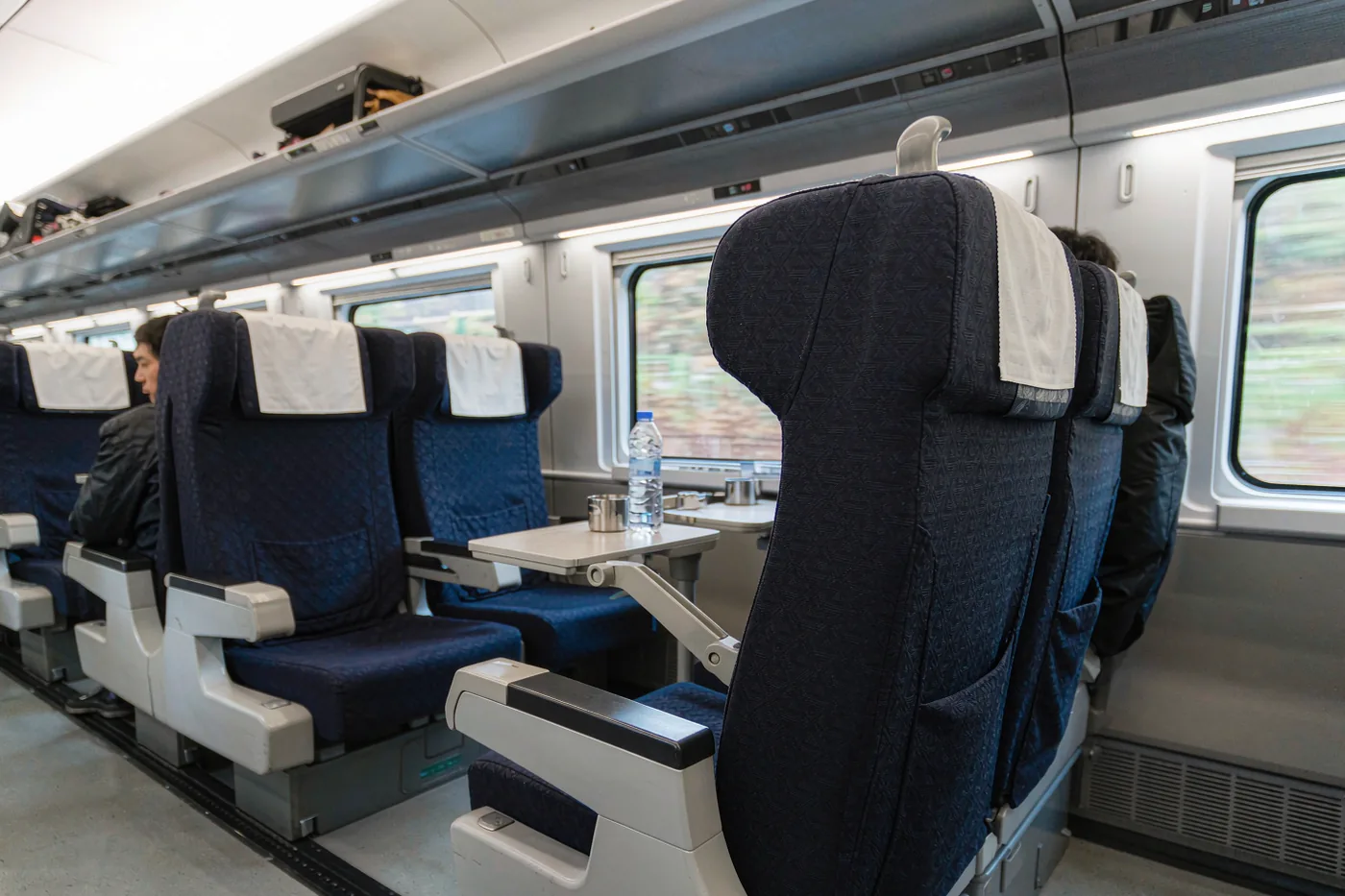
For most student travel, G and D trains are the practical choice. Conventional trains matter mainly for long overnight trips where a sleeper berth replaces a night’s accommodation.
Two routes: the official 12306 app, and third-party platforms.
12306 is the official railway booking system. It has an English interface, no booking fee, and full access to every train. The catch is registration: it requires a Chinese phone number, and it sometimes asks for additional identity verification for foreign passports. If you can get set up, use it — you get earliest access to tickets.
Trip.com (Ctrip) is the most reliable English-friendly alternative. It accepts international cards, has a clean English interface, and handles the passport details for you. It charges a small service fee (usually ¥10–30 per ticket). For most international students this is the sensible default, especially early on.
The critical mechanic: tickets go on sale 15 days before departure (this window has changed over time — check the current pre-sale window for your route in the 12306 app or on 12306.cn before you plan) and popular trains sell out within minutes of release. If you are travelling around a holiday, or on a busy route like Beijing–Shanghai on a Friday evening, book the moment tickets are released. Set an alarm.
Other practical points:
Chinese high-speed stations are enormous — think airport terminals, not railway stations. Shanghai Hongqiao and Beijing South each handle hundreds of thousands of passengers a day. Arrive 45–60 minutes before departure, more at peak times.
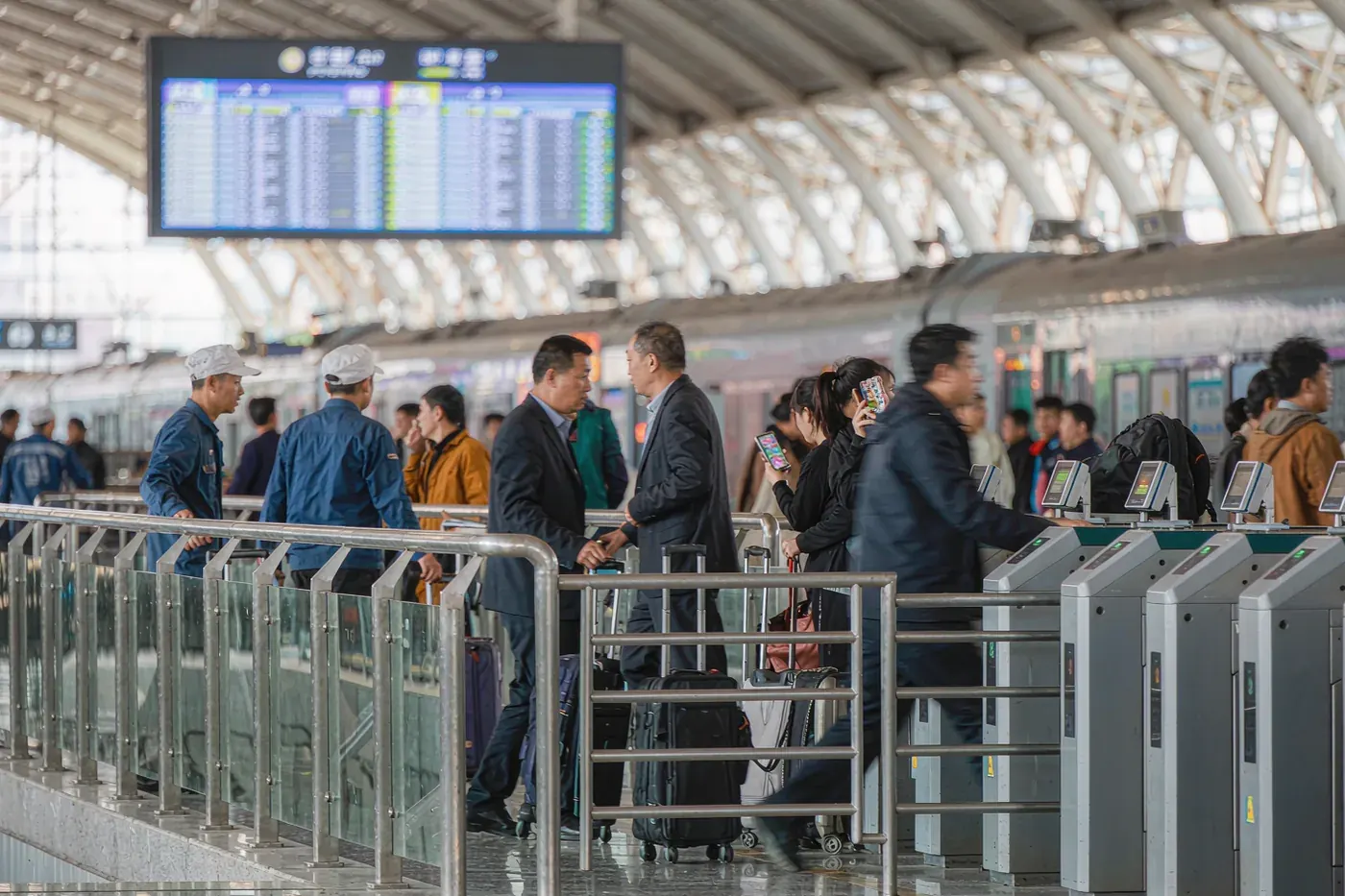
The sequence on arrival:
On board, seats are numbered and there is overhead luggage space plus larger racks at the ends of carriages. Most G trains have a dining car and a trolley service, but the food is expensive and mediocre — buy something at the station. Power sockets are standard, and Wi-Fi exists but is unreliable. Bring your own connectivity plan; see the internet guide.
Station announcements are in Chinese and English on most high-speed services, but boarding announcements can be very short. Watch the screens.
| Class | Layout | Price vs second class | Worth it when |
|---|---|---|---|
| Business (商务座) | 1+2, fully reclining | ~3× | Rarely. You get a lie-flat seat and lounge access, at near-flight prices. |
| First (一等座) | 2+2, wider seats | ~1.6× | Long journeys, or when second class is full during holidays. |
| Second (二等座) | 3+2, standard | Baseline | Almost always. Comfortable enough for 5–6 hours. |
| Standing (无座) | No seat | Same as second class | Only when you absolutely must travel and nothing else is available. |
Second class is genuinely fine. The seats recline, there is a tray table and a power socket, and the ride is smooth. Paying for first class is a modest comfort upgrade rather than a transformation.
Domestic flights in China are frequent and often cheap if booked a few weeks out. The main booking platforms are Trip.com (English, international cards, the default choice for foreigners), Fliggy (Alibaba’s travel app, integrates with Alipay) and Qunar (good for fare comparison).
Practical notes:
For very long routes or a tight budget, conventional Z and T trains offer sleeper berths, and they are a genuinely good option — you sleep on the train and save a night’s accommodation.
Book these the same way as high-speed tickets. Berths sell out well in advance on popular routes, and the cheapest categories go first.
Three periods turn Chinese transport into something else entirely:
If you must travel at these times:
Once you have done it once, high-speed rail in China is the easiest long-distance travel you will ever use. Get 12306 or Trip.com set up with your passport details before you need it, book as early as the release window allows, arrive at the station with time to spare, and treat your passport as your ticket. For most of your travel in China, the train will beat the plane on time, price and comfort — and the view from the window is considerably better.
Free resource
China Arrival Checklist
Land, register and settle in without forgetting the one form that matters. A one-page checklist covering airport arrival, police registration, SIM card, bank account and housing paperwork, in the order you actually need to do them.
Related guides
Next step
Arriving somewhere is only half the journey — here is how to navigate metro, bus, taxi and ride-hailing once you land.
Read the local transport guideOfficial resources: China Railway 12306 — official train ticket booking (Chinese; use translation in your browser).
Disclaimer: Rules, prices and platform features in China change frequently and can vary by city, institution and individual circumstances. Always confirm with the relevant authority or provider before making arrangements.
