The China Helper
Your practical guide to studying, living and learning in China.
The China Helper
Your practical guide to studying, living and learning in China.


One of the biggest surprises for students arriving in China is that winter is two different experiences depending on where your university is. North of the traditional heating line, buildings are warm enough that people wear t-shirts indoors in January while it is minus ten outside. South of it, there is no central heating at all, and the cold follows you inside in a way that newcomers from colder countries often find harder than the temperature suggests. This guide explains how each system works, what it costs you, what to check before you rent, and the small purchases that make a southern winter comfortable.
Check the official source before you act
This guide reflects how residential heating commonly works in Chinese cities and was last reviewed in September 2026. Heating dates, billing methods and building standards vary by city, district and even by individual building. Confirm the specifics for your accommodation with your landlord, your university’s housing office, or the property management office.
Last reviewed: September 2026 · Part of our Life in China guide series.
At a glance
Quick answer
In northern cities most flats have piped central heating with radiators, running on a fixed government-set season that usually starts in mid-November; it is typically billed by apartment area for the whole season and you cannot switch it on and off. In southern cities there is no central heating — you warm rooms with a heat-pump air conditioner or a portable electric heater, and you pay for the electricity you use. Before renting in either region, check radiators, window glazing and the age of the AC units, because heating is the single hardest thing to change later.
China’s heating provision broadly follows a line drawn decades ago across the country. Cities north of it were built with district heating infrastructure — a boiler or plant feeding hot water through pipes into radiators in every building. Cities south of it were not, on the reasoning that winters there are short. The result is a genuine and slightly counter-intuitive split: a student in Harbin is warm indoors, while a student in Shanghai, where it rarely drops below freezing, may spend January cold inside their own flat.
There are exceptions in both directions. Some southern cities have district heating in newer districts, and some northern buildings — particularly older or converted ones — heat poorly. Ask rather than assume.
| North (central heating) | South (no central heating) | |
|---|---|---|
| How it works | Hot water piped from a district plant to radiators | Heat-pump air conditioner or portable electric heater per room |
| Control | Usually none in the flat; the season is set centrally | You switch it on and off yourself |
| Billing | Often a flat fee by floor area for the season, sometimes shared heating costs split across the building | Your own electricity bill |
| Indoor reality | Warm, often over-warm and dry | Room temperature follows the weather unless you heat it |
| Common complaint | Too dry, stuffy, cannot turn it down | Damp cold, condensation, high electricity bills |

You will notice radiators along the outside walls, usually under windows, with a valve at one end. The season generally begins in mid-November and runs to mid-March, set by the local government rather than by you or your landlord. In the days before it starts there is often a pressure test, and you may be asked to be at home in case a radiator leaks.
Without central heating, warmth is something you create room by room. The most efficient tool is the heat-pump air conditioner — the same unit that cools you in summer, run in reverse. It moves heat rather than making it, so it costs a fraction of a resistive electric heater for the same warmth. If your flat has a unit in each room, you have what you need; if it has one in the living room only, the bedrooms will be cold unless you supplement them.
In the north, heating is often included in the rent or billed as a single seasonal charge based on the apartment’s area, which means it arrives as one noticeable bill rather than a monthly one — and it is due whether or not you were there. Ask your landlord early in the academic year whether heating is included in your rent, billed separately, or shared across the building, because it materially changes your budget. In the south, heating is simply electricity: expect your bill to jump sharply in December and January, and budget for it rather than being surprised.
For a sense of how this fits into a monthly budget, see our cost of living guide.
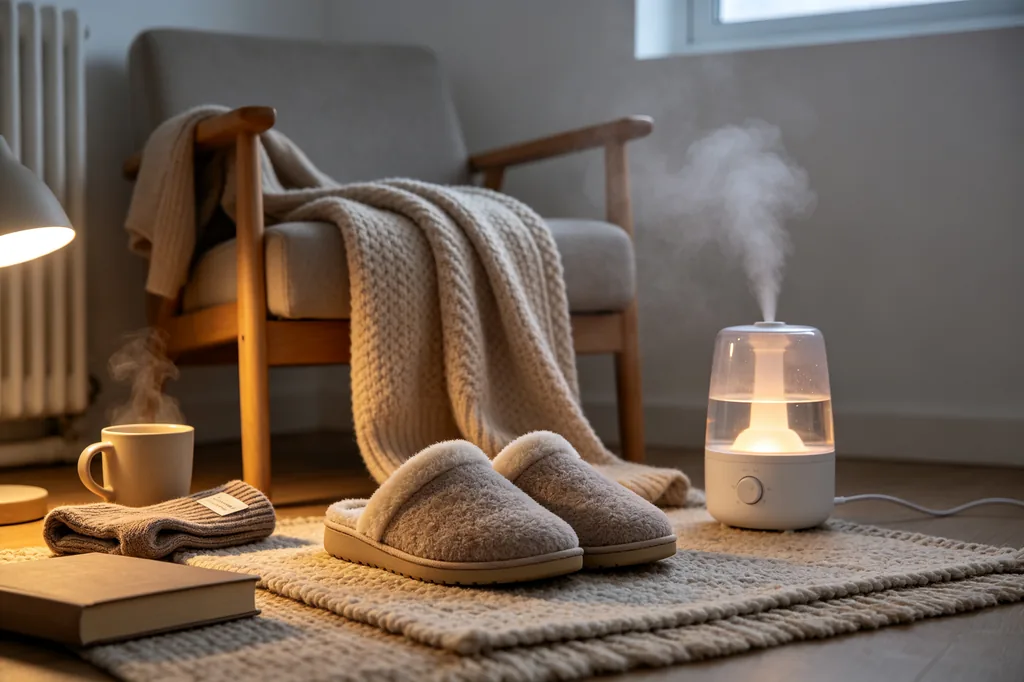
Most of what makes a cold flat bearable is not a bigger heater. The highest-value purchases are a thick rug for a tile or concrete floor, lined curtains, a pair of indoor slippers with a proper sole, a humidifier, and a fleece layer you can wear indoors. Tile floors are the main reason a southern flat feels colder than the thermometer says. If you are buying these items anyway, our online shopping guide covers how to order them.
Safety first
Never use a charcoal or gas burner indoors for warmth, never run a portable heater under a drying rack, and never leave an electric blanket switched on unattended or folded while in use. Carbon monoxide and electrical fires are the two real winter risks in student accommodation, and both are entirely avoidable. If you feel unwell with a headache and nausea in a heated, closed room, get fresh air immediately and seek help.
Free resource
Free China downloads
Checklists, phrase sheets and character packs you can print and keep — built for students in their first weeks in China.
Related guides
Next step
Heating is only one part of what a flat costs you. Work through the full monthly picture — rent, utilities, food and transport — with realistic city-by-city ranges.
See the cost of living guideDisclaimer: Rules, prices and platform features in China change frequently and can vary by city, institution and individual circumstances. Always confirm with the relevant authority or provider before making arrangements.
