The China Helper
Your practical guide to studying, living and learning in China.
The China Helper
Your practical guide to studying, living and learning in China.

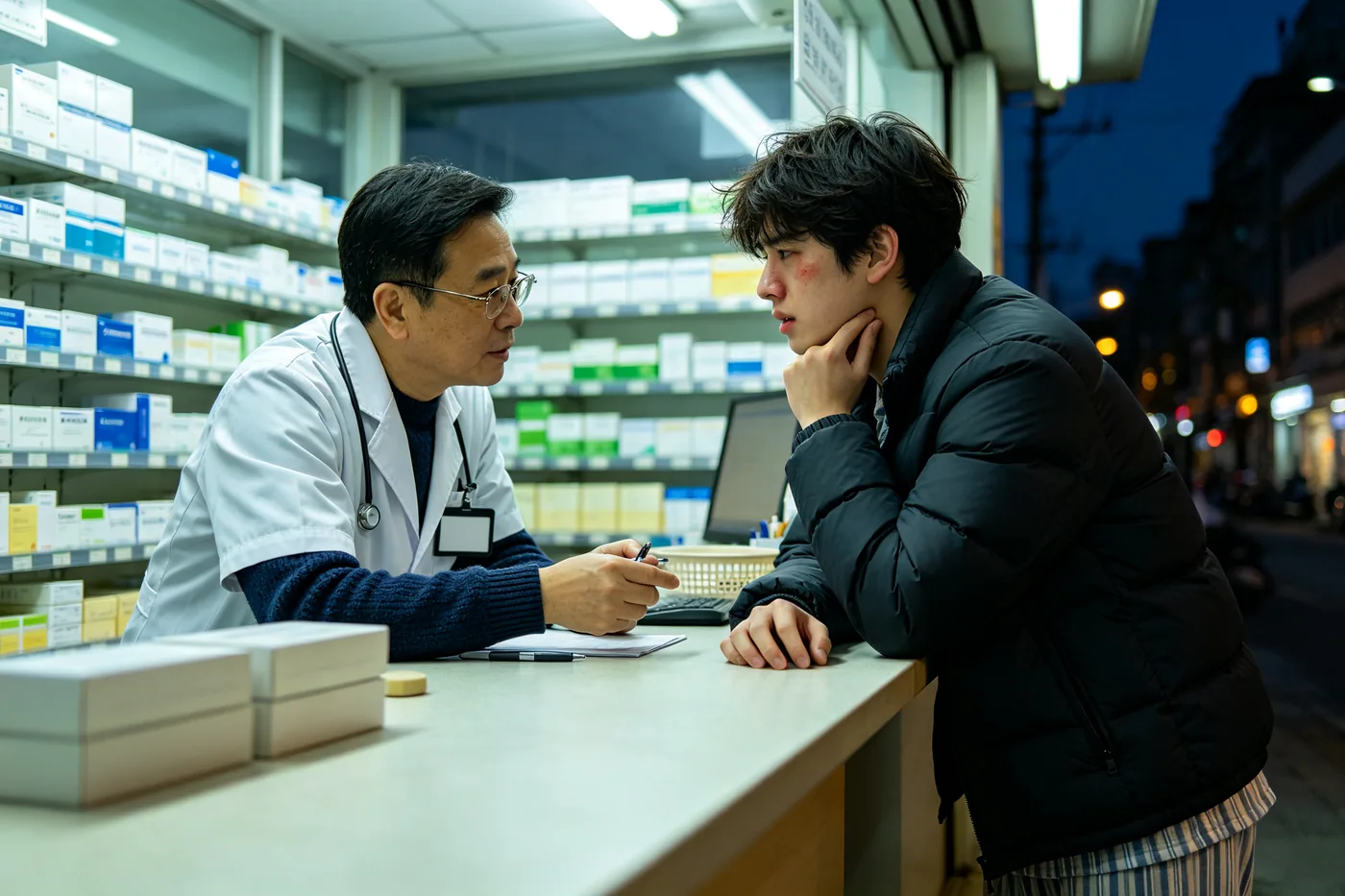
At some point in your first semester you will need medicine at a moment when you cannot read a single word on any box in the shop. That is the real problem this guide solves — not the theory of the Chinese healthcare system, but the practical business of walking into a pharmacy with a sore throat and coming out with the right thing. The good news is that Chinese pharmacies are dense, late-opening, inexpensive and staffed by people who deal with uncertain customers all day. The complication is that labels are in Chinese, brand names mean nothing to you, and counter staff may recommend a product rather than tell you what it contains. This guide explains how the shops are laid out, how to read a box well enough to use it, which common medicines are genuinely available without prescription, what you definitely cannot just buy, how to communicate without language, and when to stop treating yourself and go to hospital instead.
Check the official source before you act
Nothing here is medical advice, and this guide does not recommend treatment for any individual condition. Medicines, dosages and availability differ between countries and brands, and some products sold under one name in your home country contain different ingredients in China. Always read the packaging, ask the pharmacist, check whether a product already contains an ingredient you are taking, and see a doctor if symptoms persist, worsen or worry you. Rules on bringing medication into China are enforced at the border and change; check current rules before you travel. Last reviewed September 2026.
Last reviewed: September 2026 · Part of our Life in China guide series.
At a glance
Quick answer
Walk in and either take a product from the open shelves or go to the counter and describe the symptom. To avoid guessing at unfamiliar brands, go in with the generic ingredient written down in English — many Chinese boxes print it in Latin letters — and check the dose and expiry on the packet yourself. Common remedies for pain, fever, allergies, indigestion and travel sickness are widely available without a prescription. Antibiotics, and anything stronger, require a doctor. If you cannot communicate, show the word, show a photo of the packet you use at home, or use your phone’s camera translation; asking your university clinic to write something down for you is also completely normal. Pay with WeChat Pay, Alipay or cash. If symptoms are severe, involve breathing, chest pain, or do not improve within a couple of days, go to hospital rather than back to the pharmacy.
The first surprise is density. In most Chinese cities there are more pharmacies than bakeries, several within a ten-minute walk of most housing, and chains with illuminated green or red signs that stay open long after everything else has closed. Interior layout varies, but the pattern is consistent: shelves of packaged non-prescription products you can pick up yourself, a staffed counter where most transactions actually happen, and usually a separate area for prescription items with a pharmacist present.
Unlike in some countries, the counter is where you should generally head. Staff expect to be told a symptom and will bring you something from behind the counter rather than leaving you to find it. That is convenient and also the reason the next section matters: what they offer may be a brand rather than the ingredient you were expecting.
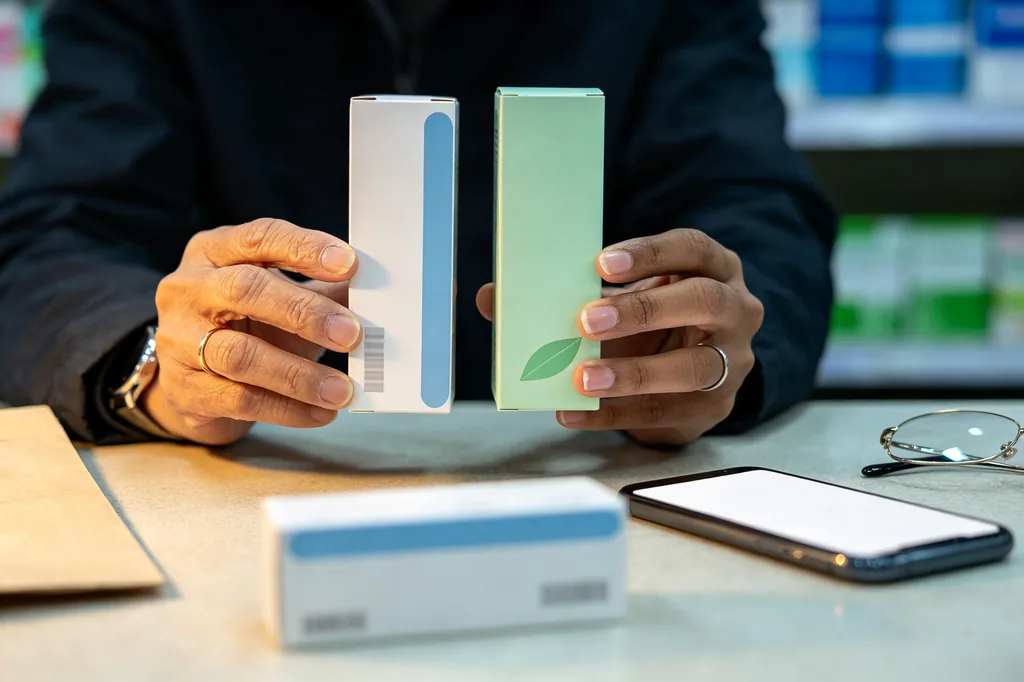
You do not need to read Chinese to get four important facts off a packet. Once you know what you are looking at, most boxes become usable even though most of the text stays opaque.
| What you are looking for | How to recognise it | Why it matters |
|---|---|---|
| The generic ingredient name | Usually appears in Latin letters somewhere on the front or side: look for words ending in -ine, -ol, -azole or -fen | This is the only reliable way to know what you are taking, and it lets you avoid taking the same active ingredient twice |
| The strength in milligrams | Printed as a number followed by mg or g near the product name | Dose guidance assume a certain strength; knowing yours prevents under- or over-dosing |
| Whether it needs a prescription | Non-prescription items carry a visible category mark on the packaging; the milder category typically uses a green mark and the category to be sold with advice uses a red one | Tells you what you can legally buy without seeing a doctor |
| The expiry date and batch number | Printed on the side or end flap as a date string | Always check it; stock rotation in busy shops is not something you should trust implicitly |
If a product has no generic name you can read and no strength you can identify, ask for something else or take it to your university clinic and get someone to read it. Guessing at unfamiliar medication is the one shortcut in this guide that genuinely is not worth taking.
Availability is broad and prices are low, often a fraction of what the same medicine costs in Europe or North America. What follows is a map of categories rather than a medicine cabinet: check each product’s own instructions, ask the pharmacist if you take other medication, and ask a doctor if symptoms last more than a day or two.
| What people ask for | Commonly available without prescription | Worth knowing |
|---|---|---|
| Pain, fever and headaches | Paracetamol (known as acetaminophen in some countries) and ibuprofen | Ibuprofen can upset the stomach, so take it with food; paracetamol does not suit everyone with liver conditions |
| Hay fever, dust and itchy eyes | Non-drowsy antihistamines such as loratadine or cetirizine | Check whether the version you are offered is the non-drowsy one; some antihistamines cause sleepiness |
| Coughs and colds | Cough syrups, lozenges, and compound cold remedies | Compound remedies frequently already contain paracetamol — check, or you may double your dose |
| Indigestion and heartburn | Antacids and stomach-soothing preparations | Persistent symptoms deserve a doctor rather than repeat antacids |
| Diarrhoea and dehydration | Oral rehydration salts, and anti-diarrhoeal preparations | Rehydration matters more than stopping symptoms, especially in hot weather |
| Travel sickness | Motion sickness tablets, often taken before the journey | Take them ahead of travel rather than once you feel unwell |
| Minor cuts, blisters and scrapes | Antiseptic solution, sterile dressings and plasters | Everything here is cheap; build a small kit before you need it |
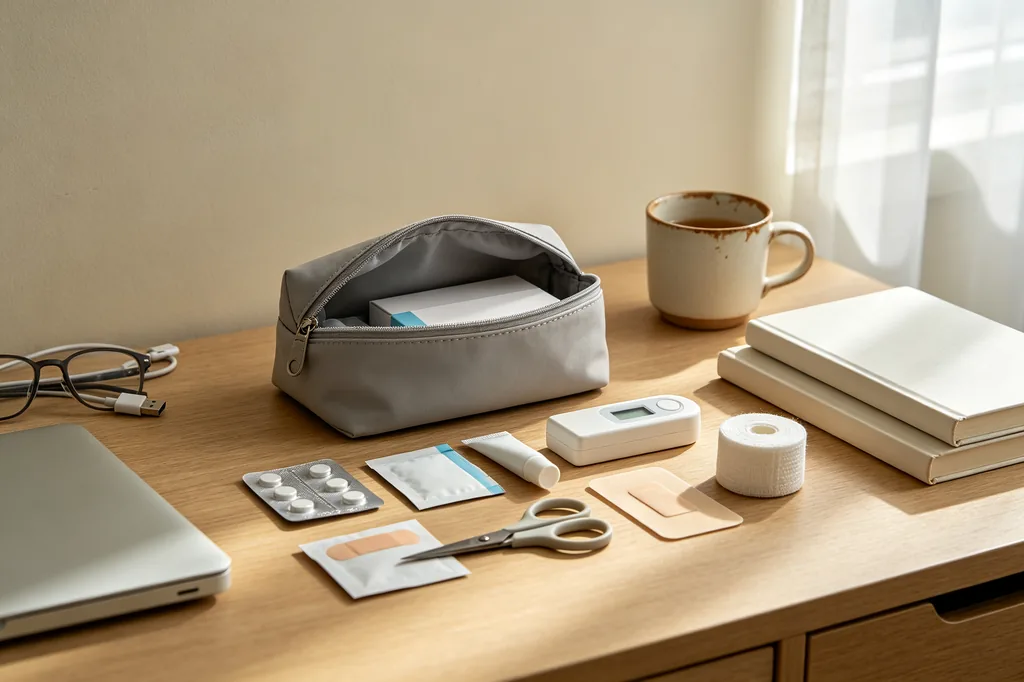
Build the kit before you need it
Assemble a small box in your dormitory over your first week: paracetamol or ibuprofen, a non-drowsy antihistamine, oral rehydration salts, plasters, antiseptic and a thermometer. Shopping for medicine while you are already ill, in a second language, is a miserable way to learn (this) system.
This is clear-cut and worth respecting: antibiotics are prescription-only. Regulation has tightened considerably, pharmacies are accountable for supplying them, and attempting to buy them without a prescription puts everyone involved at risk — including you, because choosing the wrong antibiotic or the wrong course length is how resistance and treatment failures happen.
The practical route is simple. Go to your university clinic or a hospital outpatient department, get seen by a doctor, and take the prescription back to the pharmacy. Outpatient consultations are quick by international standards and considerably cheaper than paying for private care at home.
Worth handling carefully, because it is one of the few areas where getting it wrong has consequences at the border rather than merely an inconvenient afternoon. Bring medication you genuinely rely on in its original labelled packaging, carry a prescription or a letter from your doctor describing what it is and why you need it, and keep quantities proportionate to your own use.
Be particularly careful with anything controlled: stimulant medication for attention conditions, opioid-containing painkillers, some sleeping tablets and certain anxiety medications attract stricter rules, and products that are ordinary prescriptions at home can be restricted here. Check the current position with the relevant authority before you fly, ask your doctor to document anything unusual, and never carry medication loose or repackaged.
This is the part most students worry about and it is more solvable than it looks. Pharmacists deal with uncertainty all day; what helps them is a specific prompt rather than a reported difficulty.
Most counter purchases are inexpensive, and payment runs through the same systems as everything else: Alipay, WeChat Pay or cash. Prescriptions obtained at a hospital are paid for at the hospital rather than the pharmacy. Whether international students can access public medical insurance varies by university and programme, and many students are covered by a university-arranged policy with its own reimbursement rules — check what yours covers before you need it, and keep every receipt and consultation record.
A pharmacy is for short-lived, self-limiting problems. Everything below deserves a doctor rather than another box off the shelf, and Chinese hospitals handle walk-in outpatient cases quickly, so going is rarely as much of an ordeal as visitors expect.
Keep your university clinic number, your nearest hospital’s location and your insurance details somewhere you can find them without thinking. Those three things, stored in your notes before they matter, are the difference between an unpleasant evening and a serious one.
Free resource
Free China downloads
Checklists, phrase sheets and character packs you can print and keep — built for students in their first weeks in China.
Related guides
Next step
A pharmacy handles the small problems. For anything bigger you will want to know how clinics, hospitals and student insurance actually work before you need them.
Read the healthcare guideDisclaimer: Rules, prices and platform features in China change frequently and can vary by city, institution and individual circumstances. Always confirm with the relevant authority or provider before making arrangements.
