The China Helper
Your practical guide to studying, living and learning in China.
The China Helper
Your practical guide to studying, living and learning in China.

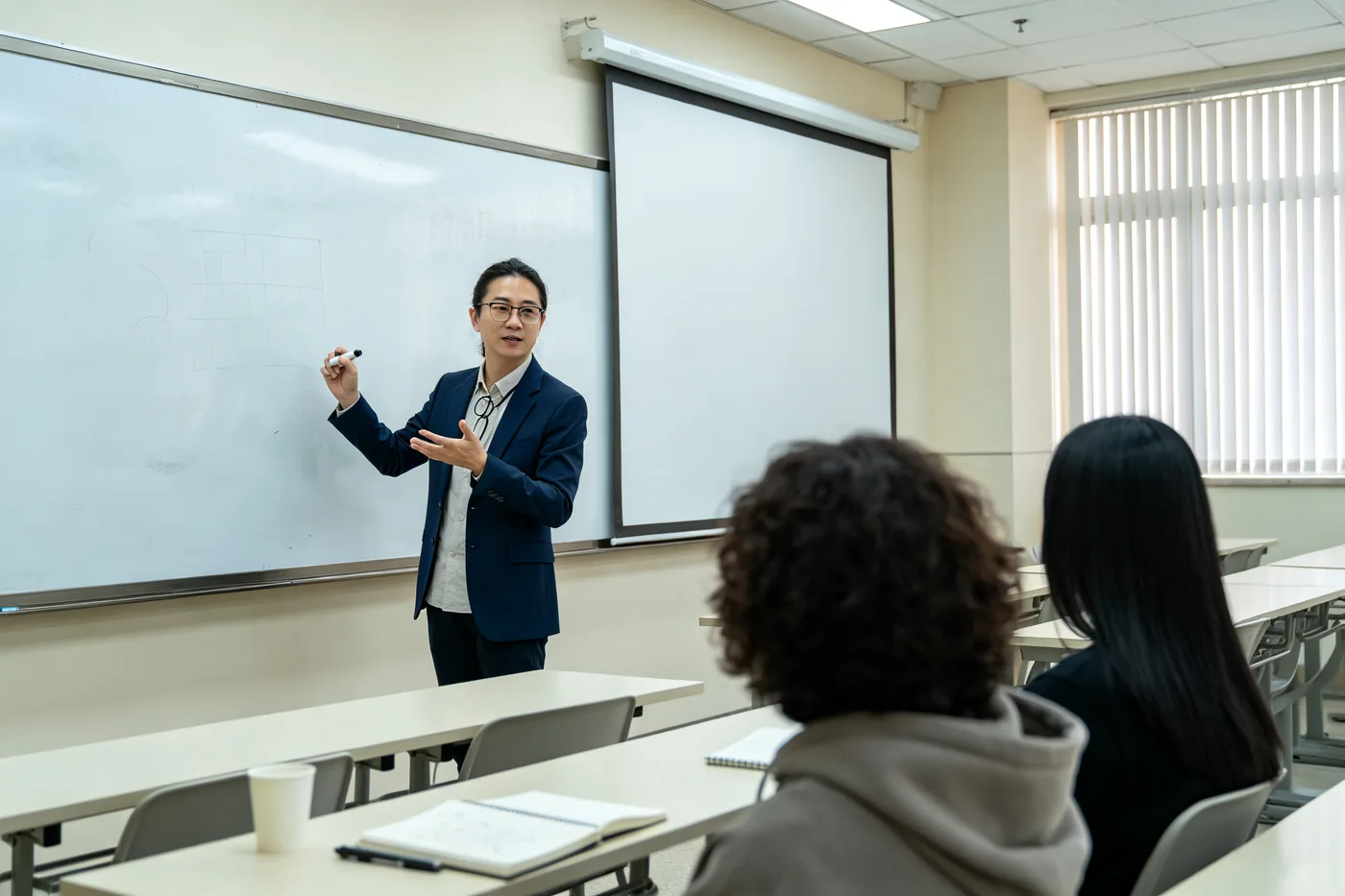
If you are coming to China to study a degree programme in English, or arriving on a scholarship that includes a language year, you will spend a surprising amount of your week in a Chinese classroom — and it will probably not feel like language lessons you have had before. The pace is fast, the method is repetition-heavy, the homework is real, and attendance is taken seriously enough that it affects your visa and your scholarship. This guide describes how classes are structured, what a typical lesson looks like, how you are assessed, and what students who improve quickly do differently from those who plateau.
Check the official source before you act
This guide reflects how university language programmes in China are commonly structured and was last reviewed in September 2026. Programme length, class hours, assessment weightings and attendance rules differ significantly between institutions and between degree programmes and language-year courses. Confirm the requirements of your own programme with your department or international student office.
Last reviewed: September 2026 · Part of our Study in China guide series.
At a glance
Quick answer
University Chinese classes are usually intensive, streamed by level, and taught almost entirely in Chinese even at beginner level. A typical lesson moves quickly through review, new vocabulary and sentence patterns, drill, and dictation, with homework every day and regular tests. Attendance counts towards your grade and can affect your scholarship and visa. The students who improve fastest are the ones who treat class as the structure rather than the source — reviewing daily, speaking outside lessons, and using the language in real situations from the first week.
Two broad arrangements exist. If you are on a language programme — a semester or a year of Chinese before or instead of a degree — Chinese is your full-time subject, typically fifteen to twenty contact hours a week across several different courses: listening, speaking, reading, and sometimes a separate character or grammar class. If you are a degree student, Chinese is usually one course among several, perhaps four to six hours a week, and the pace is correspondingly slower but the homework does not disappear.
Both start with a placement test. Take it seriously and answer honestly about prior study: being placed one level too high means struggling with grammar you never consolidated, and being placed too low means a semester of material you already know. If you feel strongly that the placement is wrong, ask the department about moving within the first two weeks — after that it becomes administratively difficult.
| Language programme | Chinese as a degree course | |
|---|---|---|
| Contact hours | Roughly 15–20 a week | Roughly 4–6 a week |
| Courses | Separate listening, speaking, reading, sometimes characters | Usually one integrated course |
| Pace | A level per semester is common | A level per year |
| Homework | Daily, substantial | Several times a week |
| Assessment | Frequent tests plus a final exam | Usually a midterm and a final |

Classes are shorter than you might expect from the hour count — often forty-five or fifty minutes each, back to back. A representative ninety-minute session looks something like this.
The substitution drill — repeating a pattern with different words — looks mechanical and is the reason the method works. Fluency is built from patterns you can produce without thinking, and drill is how that happens.
Expect homework after essentially every class: characters to write a fixed number of times, grammar exercises, and preview. It is cumulative — falling two days behind in a language-year programme is genuinely hard to recover from, because each lesson assumes the last.
Degree students often treat Chinese class as an obligation and miss the fact that it is the thing that determines how much of your time in China is actually available to you. Even at four hours a week, the difference between a student who can order, ask and read signs and one who cannot is enormous by the end of the first year — in confidence as much as in language. If your programme offers extra options — a character class, a culture course, a speaking club — take them while your schedule allows.
On scholarships and attendance
Scholarship renewal in China commonly requires satisfactory academic progress, and language-class attendance and grades are part of that record. Check your scholarship terms and your programme handbook in the first month, and keep your own record of attendance and results. See our scholarships guide for what to confirm.

Free resource
Free China downloads
Checklists, phrase sheets and character packs you can print and keep — built for students in their first weeks in China.
Related guides
Next step
Language class is one part of the wider picture. See what university life in China involves beyond the classroom — accommodation, societies, and the rhythm of a semester.
Read the university life guideDisclaimer: Rules, prices and platform features in China change frequently and can vary by city, institution and individual circumstances. Always confirm with the relevant authority or provider before making arrangements.
