The China Helper
Your practical guide to studying, living and learning in China.
The China Helper
Your practical guide to studying, living and learning in China.


Most international students default into a dorm without ever comparing it to the alternative — and most are glad they did, at least for the first semester. But dorms and off-campus flats are genuinely different products, with different paperwork, different rules and different social lives. This guide compares them honestly: what a dorm includes and demands, what renting your own flat involves, and how to decide — including how to switch later if the first choice stops fitting.
Check the official source before you act
This guide reflects accommodation practice as commonly offered by Chinese universities and the private rental market, and was last reviewed in September 2026. Dorm rules, application windows, prices and tenancy norms vary widely by university and city. Confirm with your university’s international student office and, for private rentals, with your agent and landlord before you decide.
Last reviewed: September 2026 · Part of our Study in China guide series.
At a glance
Quick answer
On-campus dorms are the low-admin default: one payment bundled with enrolment, police registration handled for you, and instant friends — but rooms are usually shared, rules on guests and gate hours are strict, and space is minimal. Off-campus flats give you privacy, cooking and quiet, at the cost of agent fees, a deposit, your own bills and your own police registration. A common pattern: take the dorm for the first semester while everything is new, then move off campus once you know the city — if your visa paperwork and budget support it.
| On-campus dorm | Off-campus flat | |
|---|---|---|
| Payment | Per semester/year, bundled with enrolment | Deposit + rent, usually quarterly or monthly, plus agent fee |
| Room | Commonly 2–4 students per room | Your own room, often your own bathroom in newer compounds |
| Paperwork | University handles police registration | You register with the police yourself |
| Bills | Usually included or via campus card | Electricity, water, gas, broadband — yours to manage |
| Rules | Gate hours, guest rules, inspections | Whatever your lease says |
| Social life | Immediate and dense | Quieter; you build it yourself |
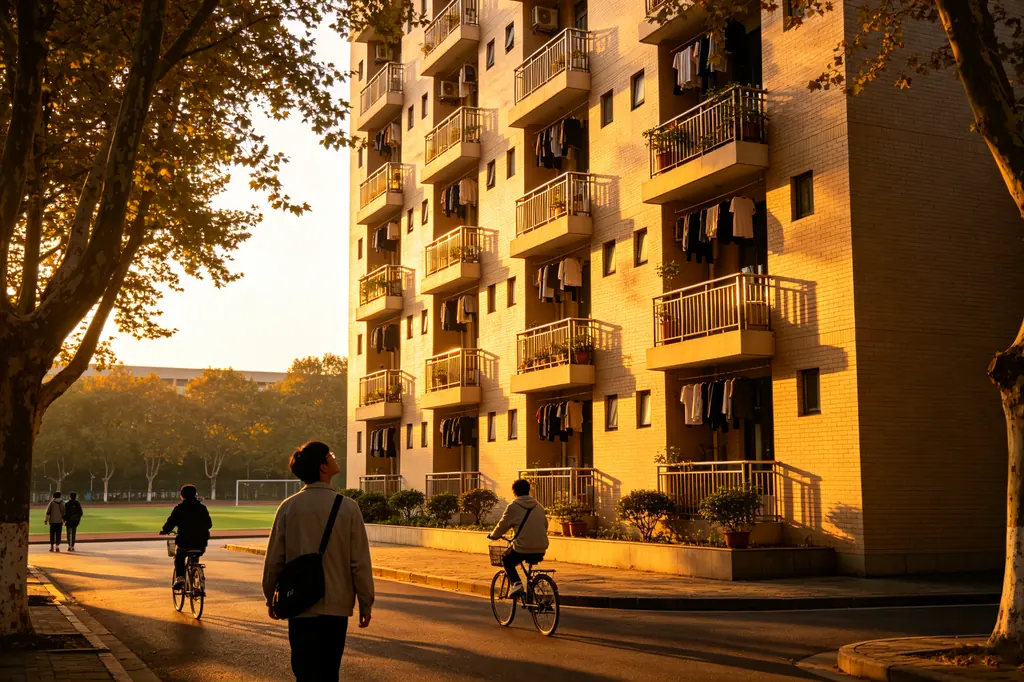
Dorm rooms for international students are allocated by the university, not chosen on an open market — and in popular cities the good rooms go first. Typically you indicate your preference during admission or shortly after, pay with or shortly after tuition, and receive a room assignment with your enrolment pack. Some universities let international students request single rooms; availability varies and the price steps up accordingly.
Chinese dorms are well-built and well-located but run on rules that Western students rarely expect. None of these are universal — they vary by university — but all are common enough to check in advance:
For many students these rules are the trade for unbeatable convenience: two minutes to class, canteens downstairs, and a built-in social group from day one. Our university life guide describes the daily rhythm you would be stepping into.
The private market gives you privacy, your own kitchen and a normal adult routine — in exchange for the full rental admin. The mechanics are covered properly in our renting, contract and deposit guide and the broader accommodation guide, but in summary: you (or an agent) find the flat, pay a deposit plus usually one month upfront plus an agent fee, sign a lease, and take on the bills.
Wherever you live, the police registration rules apply — the difference is who does them. In a dorm, the university registers you and re-registers you if you move rooms. In a flat, you register yourself within 24 hours of moving in, and again within 24 hours every time the address changes. Our police registration guide walks through it. Your registered address also feeds into residence permit paperwork, so a flat move in your first month lands in the middle of your busiest admin window — one more argument for starting in a dorm if your arrival is complicated.
Dorm rates and city rents vary so much between cities and universities that a single number would mislead you — ask your international office for the actual dorm rate, and check local listings for real flat prices in your city. What you can compare today is the structure: dorms bundle everything into one predictable payment, while flats split into rent, deposit (recoverable), agent fee (not recoverable), and running bills. Over a year, a flat is usually the pricier path once all of it is counted — the privacy is what you are buying.

Free resource
Free China downloads
Checklists, phrase sheets and character packs you can print and keep — built for students in their first weeks in China.
Related guides
Next step
If a flat is in your future, the contract and deposit guide is the one that saves you money.
Read the renting guideDisclaimer: Rules, prices and platform features in China change frequently and can vary by city, institution and individual circumstances. Always confirm with the relevant authority or provider before making arrangements.
