The China Helper
Your practical guide to studying, living and learning in China.
The China Helper
Your practical guide to studying, living and learning in China.

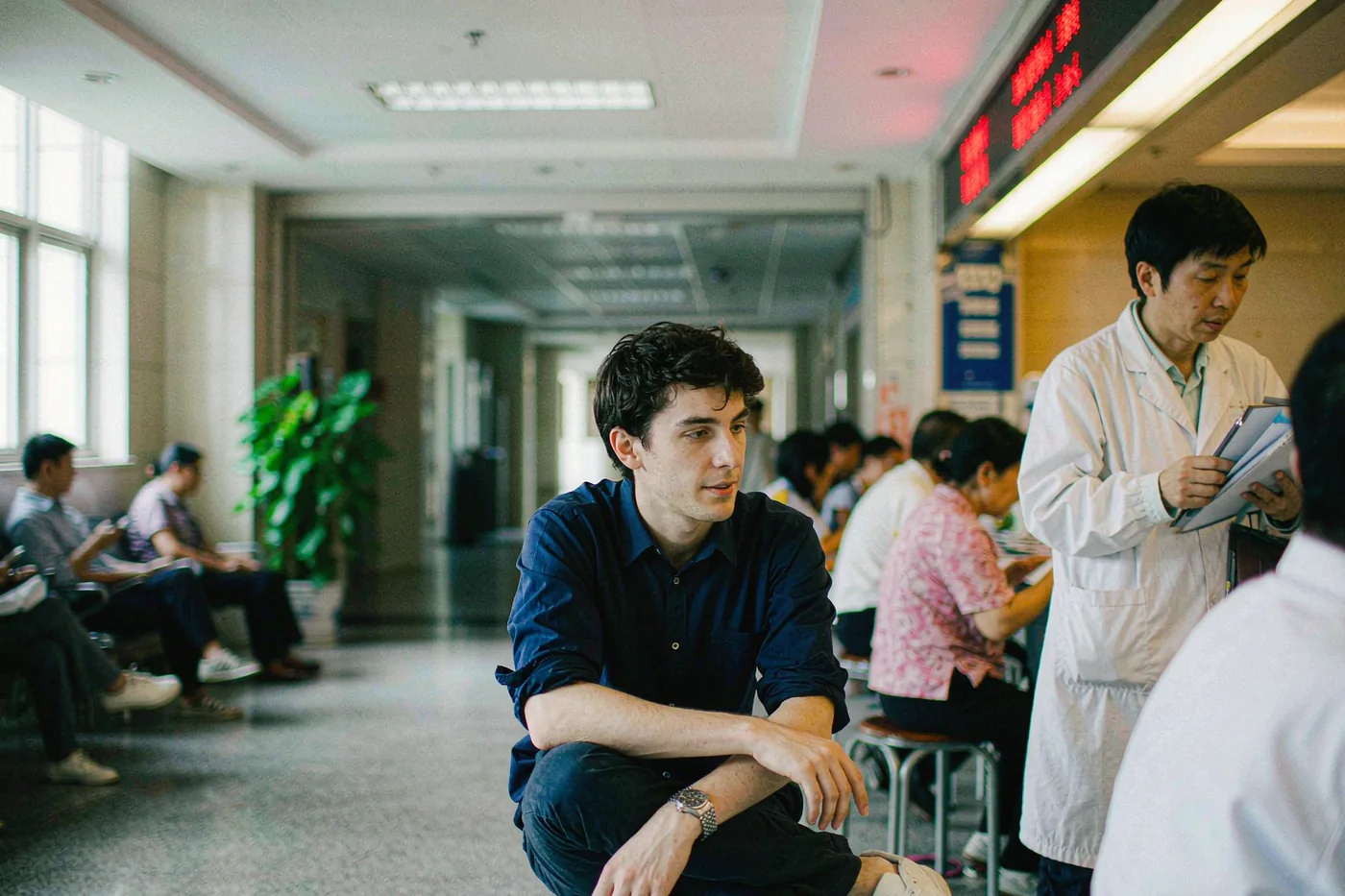
How to register with a hospital, use your student insurance, see a doctor, fill a prescription and handle emergencies in China.
Healthcare in China is modern, fast and far cheaper than most international students expect. This guide explains how hospitals work, what your student insurance covers and what to do in an emergency.
Check the official source before you act
This guide reflects rules and prices as published by Chinese authorities and providers, and was last reviewed in September 2026. Rules, fees, platform features and deadlines change, and city offices and branches apply them differently. Confirm the current position with your university’s student insurance office, the hospital’s international desk, or the National Healthcare Security Administration before you rely on any figure below.
Last reviewed: September 2026 · Part of our Life in China guide series.
At a glance
Quick answer
Most international students must hold approved health insurance — usually arranged and paid by the university — and public hospitals are the backbone of care: cheap, fast, and pay-first-claim-later. Bring your passport to every appointment; it is your patient ID. Registration runs through a counter or kiosk, and most hospitals want WeChat or Alipay to book. For emergencies dial 120 for an ambulance; your university’s international office usually has a 24-hour line as well.
Healthcare is the topic students most often avoid thinking about until they need it, and the one where a bit of preparation matters most. China’s system is capable, quick and inexpensive by Western standards, but it works on a different logic: you pay up front, you carry your own records, and nobody will walk you through the paperwork unless you ask. This guide covers what your insurance does and does not cover, how a hospital visit actually runs, and what to do when something goes wrong at 2am.
China runs a three-tier system. At the bottom are community clinics and campus health centres, which handle minor complaints cheaply and without appointments. Above them are district and city hospitals, which is where you will go for anything involving a specialist. At the top are the major teaching hospitals in big cities, which have the best specialists and the longest queues.
There is no GP gatekeeper. You do not need a referral to see a specialist — you simply register for the department you want. That is convenient and also a trap: students unfamiliar with the system often book the wrong department and lose a morning to it. If you are unsure, use the hospital’s triage desk (分诊台, fēnzhěn tái) and describe your symptoms; they will point you to the right one.
Two parallel systems exist: Western medicine (西医) and Traditional Chinese Medicine (中医, TCM). TCM hospitals and departments offer acupuncture, cupping, herbal remedies and tuina massage. They are legitimate, widely used by Chinese patients, and sometimes covered by student insurance — but for acute problems most international students use Western departments.
International clinics and private hospitals also exist in Beijing, Shanghai, Shenzhen and Guangzhou. They are expensive (a consultation can run ¥800–2,000) but they have English-speaking staff and direct billing with international insurers. Worth knowing where your nearest one is even if you never use it.
About these figures: cover levels, registration fees and consultation charges vary by university, city and hospital tier. The ranges below are what students commonly report; your own policy document and the hospital’s posted fee schedule are the authority — ask your international office for both in your first month.
Nearly all universities require international students to hold a Chinese government-approved insurance plan before they can register, and most will enrol you automatically and bill it with your tuition. This is typically the Comprehensive Insurance and Protection Scheme for Foreigners Staying in China, offered through Ping An, China Life or similar providers.
| Item | Typical coverage | Watch out for |
|---|---|---|
| Annual cost | ¥600 – 1,000 | Billed with tuition; rarely optional. |
| Outpatient | Often capped with a deductible | Many plans exclude routine outpatient entirely, or only cover it after a per-visit excess. |
| Inpatient / hospitalisation | Usually ¥200,000 – 400,000 | The main reason the policy exists. |
| Accidental injury / death | Lump-sum benefit | Defined narrowly — check the schedule. |
| Dental | Usually accident-only | Routine fillings and cleaning almost never covered. |
| Pre-existing conditions | Typically excluded | Declare at enrolment; get your own cover if you have an ongoing condition. |
| Maternity | Almost always excluded | Requires separate private cover. |
Read your actual policy schedule rather than trusting this table — universities switch providers and the terms shift. The three questions to ask your international office are: does it cover outpatient, what is the deductible per visit, and does it cover me outside the city where I study.
If you have a chronic condition, the university plan is unlikely to be enough. Bring a three-month supply of medication with a copy of the prescription, and consider maintaining private international cover alongside it.
Registration (挂号, guàhào) is the step that confuses people most, because in China it means joining the queue for a specific doctor rather than arriving at a clinic. There are three ways to do it, and knowing all three saves a great deal of time.
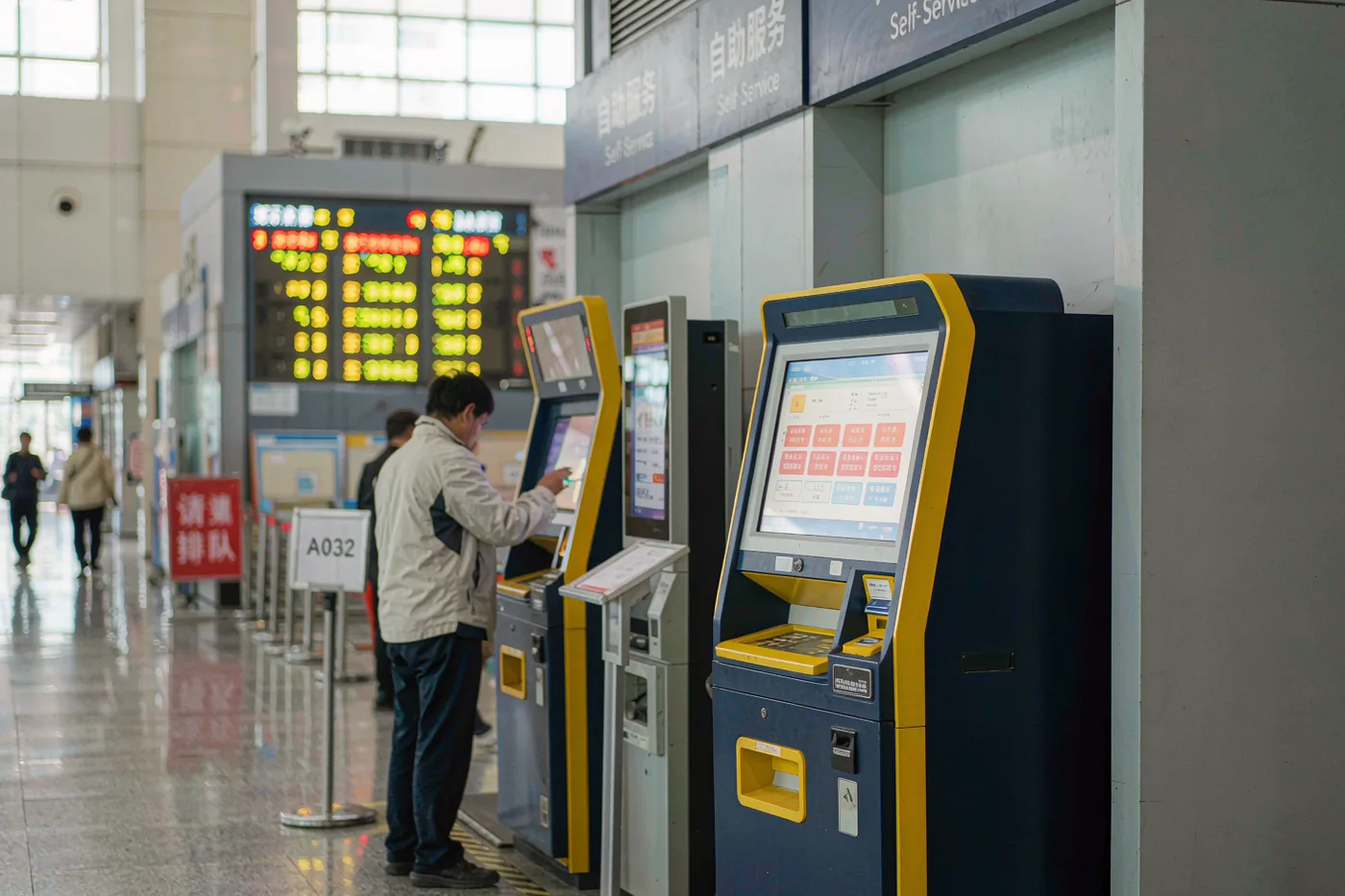
Registration fees vary hugely by doctor tier: a general practitioner might cost ¥10–30, a senior specialist ¥50–100, and a “expert” (专家) consultation ¥200–500. For a first visit on an unclear problem, the general tier is usually right and much faster to get.
Once registered you will be given a number. Screens around the department show whose turn it is, and the system will call your number — sometimes only in Chinese, with no announcement in English. Watch the screen rather than listening.
Expect the consultation itself to be short. Three to eight minutes is normal, and doctors see an enormous volume of patients. That is not rudeness; it is the throughput the system is built for. Get your point across quickly and concretely.
Useful preparation:
After the consultation you will typically be sent to pay, then to a test or pharmacy, then back to the doctor with results. The loop can take two or three hours for something that felt like it should take twenty minutes. Budget the morning or afternoon rather than squeezing it in.
Language is the real barrier at most public hospitals. English-speaking doctors exist but are concentrated in international departments and private hospitals. Your most reliable move is to bring a Chinese-speaking friend — most universities have a student volunteer group for exactly this, and the international office will usually help if you ask.
Pharmacies (药店, yàodiàn) are everywhere, open late, and staffed by people who will sell you a wide range of medicines without a prescription. Common antibiotics, cold remedies, painkillers and stomach medication are all over the counter.

That convenience has a caveat: self-treating is culturally normal here, and the counter staff are salespeople rather than clinicians. For anything beyond a cold, get a diagnosis first and take the prescription to the pharmacy. If you are prescribed something, complete the course even if you feel better — antibiotic resistance is a genuine problem in China and courses are sometimes cut short.
If you take regular medication from home, check before you arrive whether it is legal to bring in. Most common prescriptions are fine with a copy of the prescription and the original packaging, but some controlled medications — including certain ADHD stimulants and strong painkillers — are restricted or prohibited. Check your country’s China travel advice and the Chinese embassy site before you fly.
Dental. Hospital dentistry departments are good and much cheaper than in the West — a filling might cost ¥200–600, a cleaning ¥150–300. It is rarely covered by student insurance, and public dental clinics have long waits. Private dental chains in big cities are efficient and have English-speaking staff.
Vision. Eye tests are quick and cheap at hospital ophthalmology departments. Glasses and contact lenses are inexpensive, and the optical shops clustered around most university areas can make a pair in under an hour for ¥200–800.
Mental health. This is the area with the biggest gap. Most universities now have a counselling centre, and the quality ranges from excellent to nominal. English-language counselling is available in Beijing, Shanghai and a handful of other cities, but it is expensive and scarce outside them.
If you are struggling, the practical steps are: register with your university counselling service early rather than at crisis point, ask the international office for external referrals, and keep a line open to support at home. Homesickness and isolation peak around weeks four to eight — see the culture shock guide for what that actually feels like and what helps.
| Service | Number | Notes |
|---|---|---|
| Ambulance | 120 | Chinese-language. Have a Chinese speaker call if you can. |
| Police | 110 | Also the number for crime, lost passports and serious accidents. |
| Fire | 119 | — |
| Your university | Varies | Most international offices run a 24-hour emergency line. Save it on day one. |
| Your embassy | Varies | Save the number before you need it; they assist with serious medical cases and lost documents. |
Emergency departments (急诊, jízhěn) at public hospitals operate 24 hours and do not require advance registration — you register on arrival and are triaged. For anything genuinely urgent, go straight there rather than waiting for a normal department to open. Take your passport and your insurance policy number with you.
Ambulances are cheap but not always fast, and in a dense city a taxi or ride-hailing car is often quicker for a non-life-threatening emergency. Use 120 when someone cannot be moved safely.
The standard pattern is pay now, claim later. Keep absolutely everything: the registration slip, the doctor’s notes, itemised receipts (发票, fāpiào is the official tax receipt — ask for it), pharmacy receipts and any test results. Photograph them the moment you get them, because the thermal paper fades.
Claims usually go through your university’s international office rather than directly to the insurer. Ask them for the process in your first month, not when you are trying to claim — deadlines are often 30 days, and some providers require notification within 48 hours of hospitalisation.
Claims are commonly rejected for missing itemised receipts, for treatment outside the policy’s hospital network, and for anything falling under a pre-existing condition exclusion. If a claim is rejected, ask your international office to appeal before you accept it.
China’s healthcare will likely be faster and cheaper than what you are used to, provided you accept that the administration is on you. Three habits cover most of the risk: keep your passport with you, photograph every receipt, and register your university’s emergency number before you need it. Beyond that, find out what your insurance actually covers in your first few weeks — it is a thirty-minute job that removes most of the unpleasant surprises later.
Free downloads
Free China downloads for international students
Free downloads for life in China: budget templates, city guides and student checklists.
Related guides
Next step
Hospital registration, booking and payment all run through WeChat and Alipay — get both working in your first week.
Set up WeChat Pay and AlipayOfficial resources: National Health Commission (China) — official health system information and hospital lists.
Disclaimer: Rules, prices and platform features in China change frequently and can vary by city, institution and individual circumstances. Always confirm with the relevant authority or provider before making arrangements.
