The China Helper
Your practical guide to studying, living and learning in China.
The China Helper
Your practical guide to studying, living and learning in China.


How to open a Chinese bank account as a foreigner: best banks, documents, the process, UnionPay card, and linking to WeChat Pay/Alipay.
Opening a bank account in China makes life dramatically easier: you can receive money, withdraw cash from ATMs, pay rent, and — most importantly — bind the card to WeChat Pay and Alipay for everyday spending. This guide walks you through choosing a bank, the documents, and the step-by-step process.
Check the official source before you act
This guide reflects rules and prices as published by Chinese authorities and providers, and was last reviewed in September 2026. Rules, fees, platform features and deadlines change, and city offices and branches apply them differently. Confirm the current position with your bank branch and its published tariff, or the State Administration of Foreign Exchange for cross-border transfer rules before you rely on any figure below.
At a glance
Quick answer
A Chinese bank account is what makes WeChat Pay and Alipay work at full limits — and it is how you receive transfers and pay rent. Go to a branch counter on a weekday, not an ATM, with your passport, visa or residence permit, police registration certificate and admission notice, and ask for a foreigner account (外国人居留账户). Ask the staff to enable mobile banking and link the card to WeChat Pay and Alipay while you are still at the counter.
Last reviewed: September 2026 · Part of our Guides guide series.
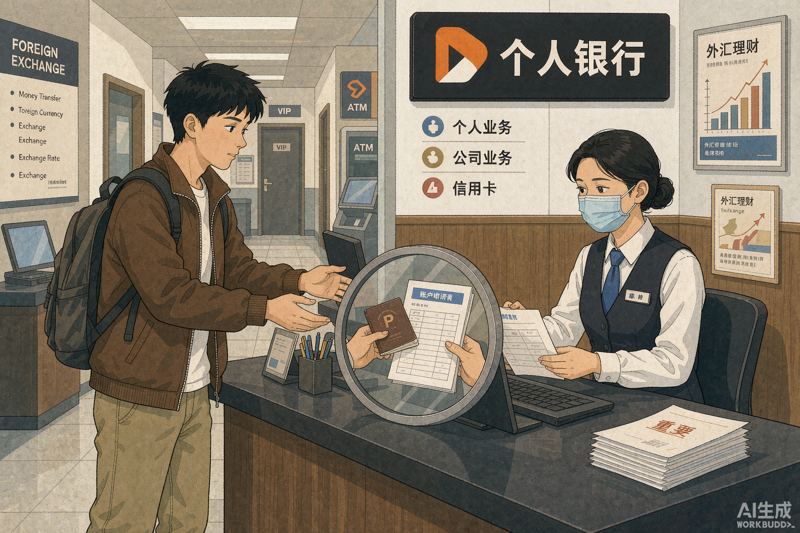

The ‘big four’ state banks all serve foreigners; pick one with a branch near campus:
Avoid niche banks: you want an English-speaking teller and an app that works abroad.
UnionPay (银联) is China’s domestic card network — accepted at essentially every ATM and merchant in the country. You can withdraw cash at your bank’s ATMs (often fee-free) and at others for a small fee. Notify the bank if you travel abroad, since overseas use may need activation.
Student accounts at the big four banks (ICBC, Bank of China, China Construction Bank, Agricultural Bank) are usually free to open with no minimum balance — but that is a commercial policy rather than a rule, and it changes, so ask what fees and minimum balance apply to the account you are actually opening. Daily ATM withdrawal limits are set by each bank and account type; ¥20,000 per card per day is a common ceiling, but your account may be lower, so check the limit when you open it. International transfers into a Chinese account are commonly quoted at ¥50–150 per transaction and three to five working days — these are the figures students report rather than regulated prices. Your bank’s published tariff and State Administration of Foreign Exchange rules are the authority, so confirm the fee and the expected arrival date at the counter before you rely on them for tuition or rent.
Two things catch newcomers out. First, your account is tied to your passport and visa — when you renew your passport or residence permit, take both old and new documents to the bank to update your records, or your cards may stop working. Second, if you plan to link the account to WeChat Pay or Alipay, do it at the counter while you are there: tell the staff you want mobile banking enabled, and they will set up the login and limits in a few minutes.
Free resource
China Arrival Checklist
Land, register and settle in without forgetting the one form that matters. A one-page checklist covering airport arrival, police registration, SIM card, bank account and housing paperwork, in the order you actually need to do them.
Related guides
Disclaimer: Rules and requirements in China may change and can vary by location, institution, or individual circumstances. Always confirm with the relevant authority before making arrangements.
